
# WHY SHOULD WE NOT ERECT A MONUMENT TO POPE CLEMENT XI IN TIRANA AND NORTHERN ALBANIA? – THE ALBANIAN-ROOTED PONTIFF WHO REPRESENTED HIS PEOPLE AT THE HIGHEST LEVEL OF THE VATICAN
**A Historical, Cultural and National Essay**
**By Flamur Buçpapaj**
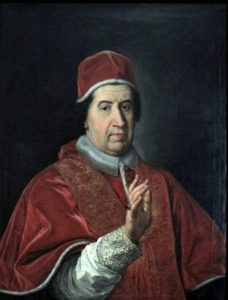
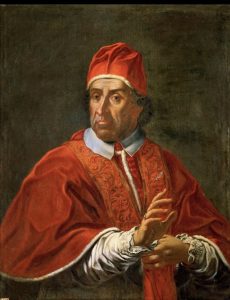
There are figures in our national history whom we have placed on the pedestal of collective memory, while others, despite reaching the highest positions in world history, have been left in silence, as though they had never existed. One of these figures is Pope Clement XI, born Giovanni Francesco Albani, who led the Catholic Church from 1700 to 1721. This raises a question that should concern our state institutions, academia, the Catholic Church, historians and Albanian society as a whole: Why has Albania still not erected a monument in Tirana and in Northern Albania to one of the most important personalities of Albanian origin to have reached the leadership of a major international institution such as the Vatican? Why have we not placed Pope Clement XI among the great figures of our national history, alongside Gjergj Kastrioti Skanderbeg and Mother Teresa?
Pope Clement XI was not an ordinary religious figure. He was the head of the Catholic Church at a time when the Vatican exercised extraordinary influence over European politics, diplomacy, culture and spiritual life. The Albani family, to which he belonged, is historically associated with Albanian origins and the migration of Albanians to Italy. Giovanni Francesco Albani was born in Urbino, Italy, on 23 July 1649, and was elected Pope in 1700. His rise to the highest office of the Catholic Church is a source of historical pride that Albanians should study, document and preserve as part of their national heritage. It is no small achievement that a man from a family traditionally associated with Albanian roots reached the leadership of an institution with influence across Europe and the wider world. If Skanderbeg represented Albanian resistance through the sword, Pope Clement XI represented another dimension of Albanian historical presence: diplomacy, spiritual authority and international influence.
One of the most important reasons for remembering Pope Clement XI is his connection with the Assembly of Arbër, held in 1703 in Mërqi, near Lezhë. This assembly represents a significant event in the history of the Albanian Catholic Church and Albanian culture. Pope Clement XI supported this ecclesiastical initiative, which sought to strengthen the organisation of the Church in Albanian territories, improve religious life and protect the identity of Catholic communities. Important matters concerning language, education, religious instruction and church organisation were addressed. The decisions and proceedings of the Assembly were published in Rome in 1706, forming part of the historical record of Albanian-language writing. This demonstrates the importance attached to the Albanian question and to the use of the Albanian language in religious life at the highest levels of the Catholic Church. We should not claim, without documentary evidence, that Pope Clement XI personally wrote books in Albanian or organised uprisings against the Ottoman Empire. His support for Albanian ecclesiastical organisation and the Assembly of Arbër, however, remains historically significant.
The history of Albania cannot be understood without recognising the role of the Catholic Church. During difficult historical periods, when national institutions, Albanian-language schools and independent administration were lacking, religious institutions became important places where language, traditions, writing, culture and historical memory were preserved. Albanian Catholic clergy made an invaluable contribution to the development of the Albanian language and literature. We need only remember Gjon Buzuku, author of the *Meshari*, the oldest known printed book in Albanian; Pjetër Budi, an important figure in early Albanian literature; Frang Bardhi, author of the first known Latin-Albanian dictionary; Pjetër Bogdani, author of the major work *Ceta e Profetëve*; and Gjergj Fishta, poet, patriot and one of the most important personalities of Albanian culture. The Catholic Church also contributed to education, ecclesiastical music, singing traditions, architecture, art and literature. This history should never be used to place one religion above another. Instead, it should help us recognise the contribution of every religious community to the formation of the Albanian nation. Albanians are a nation with different religious traditions, but with one language, one shared history and one common homeland.
Why have we forgotten such an important personality? Why does Tirana have monuments to various historical and political figures, yet no major monument to a Pope from a family associated with Albanian origins who led one of the most influential institutions in the world? Why have we failed to make his name a point of reference for Albanian history, culture and international diplomacy? Part of the answer lies in our ideological past. During the communist regime, Albania became the world’s first officially atheist state. Religious institutions were attacked, clergy were persecuted, and a significant part of our religious and cultural heritage was destroyed or pushed into oblivion. Many historical personalities associated with religious institutions were not given the recognition they deserved. Even after 1990, the Albanian state has not done enough to restore these personalities to their rightful place in national history. We have a national responsibility to move beyond ideological prejudice and evaluate history through documents, research and historical evidence rather than political beliefs. A monument to Pope Clement XI would not be a monument to one religion against another. It would honour an important chapter of Albanian history.
What would Albania gain from such a monument? A monument in Tirana and another in Northern Albania would represent much more than works of art. They would symbolise national pride, reminding future generations that Albanians have produced personalities of international importance and that our history extends far beyond the borders of the Balkans. They would strengthen cultural diplomacy by creating a symbolic bridge between Albania, Italy and the Vatican. They could also contribute to historical tourism, becoming part of a cultural route connecting Lezhë, Shkodër, Mërqi and other centres of Albanian Catholic heritage. Such a project would encourage historical research, academic publications, conferences and documentaries about the Albani family, Pope Clement XI and the historical relationship between Albanians and the Vatican. It would also send an important message about religious coexistence: Albania respects all its traditions and honours every personality who has contributed to its history.
I therefore propose that the Municipality of Tirana, the relevant cultural institutions, the Academy of Sciences, the Catholic Church and the Albanian state launch a national initiative to erect a monument to Pope Clement XI. The first monument should be placed in Tirana, in a dignified public location accessible to citizens and foreign visitors. A second monument should be erected in Northern Albania, in a location historically connected with Albanian Catholic heritage and the Assembly of Arbër, preferably in the Lezhë region. Alongside these monuments, Albania should establish a historical documentation centre presenting materials about the Albani family, the life and pontificate of Clement XI, the Assembly of Arbër of 1703, early Albanian publications, the contribution of Catholic clergy to education and Albanian culture, and the historical relations between Albania and the Vatican. This would be a genuine national achievement, not merely an inauguration ceremony.
Albania cannot be proud only of the history it already knows. It must also take pride in the history it has yet to fully discover, study and recognise. Skanderbeg was the symbol of Albanian resistance. Mother Teresa became a worldwide symbol of humanitarianism. Pope Clement XI represents another dimension of Albanian presence in European and world history. We must not be afraid to recognise that people from Albanian families have held important positions within major international religious institutions. Nor should ideological or religious divisions prevent us from acknowledging our historical heritage.
I, Flamur Buçpapaj, believe that the time has come for Albania to undertake a serious national initiative to honour Pope Clement XI. Tirana should have his monument. Northern Albania should have his monument. Schools should give greater attention to his place in the history of Albanian culture, while academic institutions should examine the historical documents and establish with precision the origins of the Albani family and the influence of his pontificate on Albanian affairs.
This is not a Catholic, Muslim or Orthodox issue. It is a matter of national memory. A nation that honours Skanderbeg, Mother Teresa and other great personalities must also recognise those who represented people of Albanian origin in some of the most influential institutions of world civilisation. We are not asking history to grant us a greatness that never existed. We are asking that we do not forget the greatness that historical evidence allows us to recognise.
**Pope Clement XI must emerge from historical obscurity and take his rightful place in the pantheon of Albanian national memory.** Albania’s history is not only the history of those who fought with the sword. It is also the history of those who built institutions, defended culture, promoted knowledge and carried the Albanian name beyond the borders of their homeland. Albania has a duty to recognise, study and honour this chapter of its history.
**Flamur Buçpapaj**
Writer, publicist and journalist
*