
NOVEMBER 28, 1912–2026
114 YEARS OF INDEPENDENCE: ALBANIA, A VICTIM OF IMPERIAL RIVALRIES, BALKAN PARTITION AND THE WEAKNESSES OF ITS POLITICAL ELITES
From the Treaty of San Stefano and the Congress of Berlin to Austria-Hungary, Russia, the Ottoman Empire, Serbian, Montenegrin and Greek occupations, and the unresolved Albanian national question.
By Flamur Buçpapaj – Historical, Diplomatic and Geopolitical Analysis for Nacional Media
INTRODUCTION: AN INDEPENDENCE WON AT A TIME WHEN ALBANIA RISKED DISAPPEARING FROM THE POLITICAL MAP
The 114th anniversary of Albania’s Independence should not be merely a ceremony commemorating the raising of the national flag in Vlora. It should be an important occasion for historical analysis, national awareness and reflection on how the Albanian state was created, why Albanian territories were partitioned, and why, even after more than a century, the Albanian national question remains unresolved in its entirety.
Albania was not born in a peaceful diplomatic environment. It emerged amid a major international conflict, at a time when the Ottoman Empire was disintegrating, Russia was expanding its influence in the Balkans, Serbia and Montenegro were pursuing territorial expansion, Greece was advancing its own national expansionist project, while Austria-Hungary and Italy were attempting to prevent Serbia from gaining access to the Adriatic Sea.
Within this clash of interests, Albanian territories became objects of diplomatic bargaining, military strategies and territorial ambitions pursued by the great powers of the time.
A people with an ancient identity, its own language, history and cultural continuity was frequently treated as a secondary issue at diplomatic tables where the future of Southeastern Europe was being decided.
Therefore, understanding November 28, 1912, requires more than speaking about Ismail Qemali. We must also examine San Stefano, Berlin, Russian policy, Austro-Hungarian interests, Ottoman weakness, the Balkan Wars and the responsibilities of the Albanian political elites.
This is the history of an indispensable independence, born under the pressure of international circumstances.
I. ALBANIA IN THE NINETEENTH CENTURY: AN ALBANIAN TERRITORY WITHOUT A NATIONAL STATE
During the centuries of Ottoman rule, Albanians did not possess an independent national state. Albanian territories were divided into different administrative units of the Ottoman Empire, principally the vilayets of Shkodra, Kosovo, Monastir and Janina.
This administrative arrangement did not correspond to the geographical and national reality of a united Albanian people.
Albanians belonged to three principal religious communities: Muslim, Catholic and Orthodox. This religious diversity was used in different ways by contemporary diplomacy to weaken the idea of a common Albanian national identity.
In nineteenth-century diplomacy, religious identity carried considerable political weight. Russia presented itself as the protector of Orthodox Slavic interests, Greece claimed historical and religious connections with Orthodox populations, while the Ottoman Empire viewed a substantial part of the Albanian population through the framework of Muslim affiliation and loyalty to the Sultan.
Consequently, the Albanian national reality, comprising three religious traditions, risked being interpreted through three separate religious and political perspectives.
Yet Albanians shared something fundamental: their language, historical memory, traditions, territory and common national consciousness.
Albanians were not three different nations because they belonged to three different religions. They were one nation with three religious traditions.
This is one of the most important historical truths of our national experience.
II. ABDUL HAMID II AND THE OTTOMAN EMPIRE: AN ALLIANCE OF INTERESTS, BUT NOT FULL SUPPORT FOR THE ALBANIAN NATIONAL CAUSE
One of the recurring mistakes in interpreting Albanian history is portraying the Ottoman Empire as an unconditional protector of the Albanian people.
The Ottoman Empire had its own interest in preserving its remaining territories in the Balkans. For this reason, Albanians possessed considerable strategic importance, particularly in defending the empire’s western frontiers.
During the reign of Sultan Abdul Hamid II (1876–1909), Ottoman policy towards the Albanians was contradictory.
On the one hand, Ottoman authorities sought the support of the Muslim Albanian population against Serbian, Montenegrin and Russian expansion. On the other hand, they were unwilling to accept easily the establishment of Albanian national autonomy, with its own institutions, administration and education in the Albanian language.
This was the central historical contradiction.
Albanians wanted to defend their ancestral lands, while the Ottoman Empire wanted to keep those territories under its own authority.
The relationship was neither simply one of friendship nor one of hostility. It was a relationship shaped by competing interests, involving periods of cooperation as well as conflict.
Abdul Hamid II should be portrayed neither as an absolute enemy of the Albanians nor as the saviour of the Albanian national cause. Above all, he pursued the survival of his empire.
Following the Ottoman defeat in the war against Russia in 1877–1878, the empire was forced to accept severe territorial and diplomatic conditions. Its weakening exposed the Albanian question to the expansionist ambitions of neighbouring states.
Historians have documented that restrictions on Albanian-language education and Ottoman resistance to certain Albanian national demands deepened the conflict between the Albanian national movement and the Ottoman authorities.
Therefore, one historical lesson is clear: a nation cannot entrust its future solely to the interests of a foreign empire.
III. THE RUSSO-TURKISH WAR OF 1877–1878: THE BEGINNING OF A MAJOR THREAT TO ALBANIAN TERRITORIES
The Russo-Turkish War of 1877–1878 fundamentally changed the political balance in the Balkans.
Russia, invoking Pan-Slavism and the protection of Orthodox populations, intervened militarily against the Ottoman Empire.
Following the Ottoman defeat, the Treaty of San Stefano was signed on March 3, 1878.
This treaty was one of the most important and controversial documents in Albanian history.
It envisaged the creation of a greatly enlarged Bulgaria and granted territorial advantages to Serbia and Montenegro. The proposed new territorial arrangements also included areas inhabited by substantial Albanian populations.
The danger was obvious: Albanian territories could be divided among neighbouring states without consulting the people who actually lived there.
Russia was pursuing its own strategic interests. It sought to expand its influence in the Balkans, strengthen its Slavic allies and establish a more favourable position towards the Straits and the Mediterranean.
For the Albanians, this policy had direct consequences.
The Treaty of San Stefano never became the definitive settlement because other European powers opposed Russian dominance in the Balkans. Nevertheless, the political damage had already been done: the Albanian question had become an international issue, and the danger of territorial partition had become real.
This was one of the principal reasons behind the emergence of a stronger Albanian national movement.
The Albanian League of Prizren: A National Response to Territorial Partition
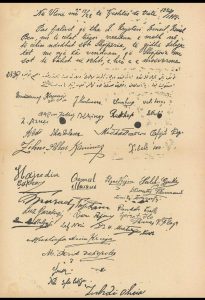
On June 10, 1878, the Albanian League of Prizren was established.
It represented one of the fundamental moments in the development of Albanian national political consciousness.
Representatives from different Albanian regions, belonging to different religious communities, united to defend Albanian territories and oppose decisions made without the consent of their population.
Abdyl Frashëri, Ymer Prizreni, Sulejman Vokshi and other prominent figures participated in this movement.
In its initial phase, the League primarily sought to defend Albanian territories and secure autonomy within the Ottoman Empire. It was not, from the very beginning, a unified movement demanding immediate independence.
Nevertheless, its historical importance was immense: it transformed the Albanian question from a local issue into a national political project.
Albanians were beginning to understand that if they did not organize themselves as a political nation, others would decide their fate.
IV. THE CONGRESS OF BERLIN, 1878: EUROPE DECIDES THE FATE OF ALBANIAN TERRITORIES WITHOUT AN ALBANIAN STATE AT THE NEGOTIATING TABLE
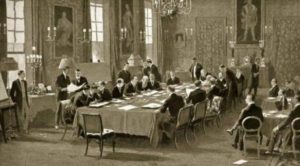
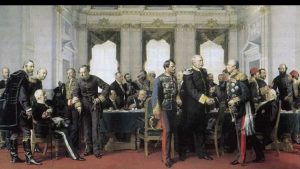
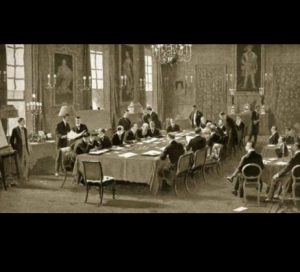
The Congress of Berlin was held from June 13 to July 13, 1878, with the participation of the principal European powers.
Germany, Austria-Hungary, Russia, Great Britain, France, Italy and the Ottoman Empire were represented at the negotiations.
However, the Albanians had no independent state delegation with equal rights at this conference. They were not represented by a sovereign national state and possessed no diplomatic power comparable to that of the established European governments to defend their own borders.
The Congress of Berlin modified some of the provisions of the Treaty of San Stefano, but it did not resolve the Albanian question.
Serbia and Montenegro received international recognition and territorial gains, while Albanian territories were considered within the framework of the interests and balance of power among the great states.
In this process, Albanian lands in the north and northeast were affected. The disputes concerning Plavë, Guci, Hoti, Gruda, Ulqin and other territories demonstrated that borders were not being determined exclusively according to ethnic realities and the wishes of the local population.
Albanian opposition to these decisions took the form of political and military resistance.
The case of Ulqin is particularly significant. Under international pressure and following the intervention of the European naval fleet, the Ottoman Empire was compelled to hand Ulqin over to Montenegro in 1880.
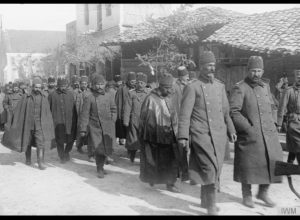
This event demonstrated that the Ottoman Empire was no longer capable of protecting Albanian territories and that the diplomacy of the great powers could impose decisions against the wishes of the local population.
The Congress of Berlin was a demonstration of European realpolitik: the interests of powerful states took precedence over the right of smaller peoples to self-determination.
V. RUSSIAN POLICY AND THE PAN-SLAVIST PROJECT: A CLASH OF INTERESTS AT THE EXPENSE OF THE ALBANIANS
To understand Albanian history, Russian imperial policy must also be examined.
During the nineteenth and early twentieth centuries, Russia pursued a policy of expanding its influence in the Balkans. It supported Slavic movements and states, particularly Serbia, Montenegro and Bulgaria, in accordance with its strategic interests.
This does not mean that every Russian action was identical or that all international relations can be explained exclusively through Pan-Slavism. However, diplomatic documents demonstrate that Russian support for its Balkan allies significantly influenced the balance of power that determined the fate of Albanian territories.
Russia had a particular interest in weakening Ottoman influence and expanding its political position in Southeastern Europe.
For Serbia, Russian support represented an important diplomatic and strategic instrument.
For the Albanians, the problem was that Serbian territorial claims frequently benefited from a broader international policy favourable to Russian allies.
In 1912, agreements between Serbia and Bulgaria, developed within the framework of their rapprochement with Russia, contributed to the formation of the Balkan Alliance.
This alliance became a military instrument against the Ottoman Empire, but Albanian territory also became one of the principal targets of the participating states’ territorial ambitions.
In this context, Russia was not a supporter of the project of a united Albanian state. It favoured a Balkan balance in which the interests of its allies took priority.
One of the most serious consequences was the exclusion of Kosovo and many other Albanian territories from the state that would be established in 1912.
This issue must be studied within the framework of Russian foreign policy at the time and its relations with Serbia.
VI. SERBIA AND MONTENEGRO: TERRITORIAL EXPANSION INTO ALBANIAN LANDS
In the history of Albanian-Serbian relations, an important distinction must be made between peoples and state policies.
It is not fair to declare an entire people a permanent enemy. However, it is equally necessary not to conceal the documented expansionist policies, occupations and violence committed by particular states and their armies against Albanians.
At the end of the nineteenth century and the beginning of the twentieth, influential Serbian political and military circles sought expansion towards Kosovo and other Albanian territories, as well as access to the Adriatic Sea.
These ambitions were justified through historical, strategic and religious claims.
An important document from this period is the framework of Serbian-Bulgarian territorial agreements of 1912, which addressed the territories expected to be taken from the Ottoman Empire.
When the First Balkan War broke out, the Serbian army entered Kosovo and continued towards northern Albania and the Adriatic coast.
Serbia sought access to the sea because it was a landlocked country and considered an Adriatic outlet strategically vital.
However, this access was sought through Albanian territories.
This created a direct confrontation between the Serbian state project and the Albanian aspiration to establish an independent national state.
Shkodra, 1912–1913: One of the Greatest Tests of Albanian Resistance
Shkodra possessed extraordinary historical, cultural, economic and strategic importance.
During the First Balkan War, Montenegro besieged the city for several months. The siege began in October 1912 and ended with the city’s surrender on April 23, 1913, according to the calendar used in contemporary historical sources.
The defence of Shkodra was led by Hasan Riza Pasha and was subsequently followed by complicated political and military developments in which Esat Pashë Toptani also played a role.
The defenders of the city endured a devastating siege with serious consequences for the civilian population.
Montenegro wanted to incorporate Shkodra into its territory. Serbia also supported military operations around the city and had a strategic interest in expanding towards the Adriatic coast.
The great powers decided that Shkodra should belong to Albania, but Montenegro did not immediately accept this decision.
Only after diplomatic pressure, a naval demonstration and the threat of international intervention did Montenegro withdraw in May 1913.
Shkodra was temporarily placed under the administration of an international force.
This history carries an important meaning: the newly established Albania could not defend its territory using its own limited resources alone. The fate of Shkodra required the intervention of the European powers.
This does not diminish the heroism of the Albanian defenders. On the contrary, it demonstrates the extraordinarily difficult circumstances in which the Albanian state was created.
VII. GREECE AND ITS TERRITORIAL CLAIMS IN THE SOUTH: THE ALBANIAN QUESTION AGAINST THE BACKGROUND OF HELLENIC EXPANSION
In the south, Albanians also faced a powerful territorial project.
Greece, which had achieved independence in 1830, pursued the expansion of its state territory within the framework of the project known as the Megali Idea.
This project sought to extend the Greek state into territories that Greek nationalist circles regarded as part of their historical and cultural sphere.
These ambitions also involved territories inhabited by Albanians, particularly in the historical region of Epirus and the southern Albanian lands.
An important historical problem arose here: the Orthodox religious affiliation of part of the Albanian population was frequently interpreted as evidence of Greek national identity.
However, religious affiliation does not automatically determine nationality.
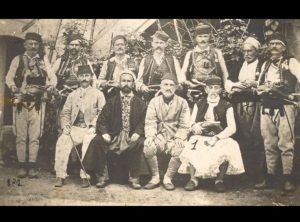
An Orthodox Albanian could be just as Albanian as a Muslim or Catholic Albanian.
During the Balkan Wars, Greek troops occupied Janina and other southern territories. When Albania’s borders were being determined, the question of Epirus and its Albanian population remained a subject of diplomatic confrontation.
The London Conference and subsequent international commissions determined the southern border, leaving outside the Albanian state territories and populations that Albanians considered part of their national homeland.
This issue should not be approached through hostility towards the Greek people. It should be examined through historical documents, legitimate rights, respect for population rights and equal international standards.
Religion must never be used as an instrument to alter the national identity of a population.
VIII. AUSTRIA-HUNGARY: THE DIPLOMATIC SUPPORTER OF THE ALBANIAN STATE
In analysing Albania’s independence, the role of Austria-Hungary is indispensable.
Without understanding Vienna’s policy, it is impossible to explain why Albania declared independence in 1912 and why certain European powers insisted on the establishment of an Albanian state.
Austria-Hungary had several strategic interests:
– To prevent Serbia from gaining access to the Adriatic Sea.
– To limit the expansion of Russian influence in the Balkans.
– To preserve the balance of power in the Adriatic.
– To prevent the expansion of Italian influence in this region.
– To establish an Albania that could serve as a factor of stability and as a buffer between competing great-power interests.
For Vienna, Albania possessed exceptional geopolitical importance. A Serbia reaching the Adriatic would fundamentally change the regional balance of power and create a strategic problem for the Habsburg Empire.
Thus, the Albanian question became part of Austro-Hungarian foreign policy.
Austria-Hungary supported the development of Albanian-language education, cultural activity and Albanian interests through several of its diplomatic centres. In Shkodra and other regions, Austro-Hungarian institutions and missions played a role in the development of Albanian education and culture.
However, the other side of the truth must also be acknowledged: Vienna did not support Albania solely out of affection for the Albanian people.
It also regarded Albania as an instrument of its own strategic interests.
This is why two aspects must be distinguished: Austria-Hungary’s genuine diplomatic contribution to the creation of the Albanian state and its own imperial interests.
Both belong to the same historical reality.
Was Independence an Act Imposed by Austria-Hungary?
This question requires a careful historical answer.
It would be inaccurate to claim that Austria-Hungary invented Albanian independence or that the Albanians had no national project of their own.
The League of Prizren, Albanian uprisings, the Congress of Manastir in 1908, the Congress of Elbasan in 1909 and the uprisings of 1910–1912 demonstrate that the Albanians had developed an internal process of national formation.
However, it would be equally inaccurate to deny that Austro-Hungarian diplomacy played a decisive role in supporting Albania’s separation from the Ottoman Empire.
In the autumn of 1912, as Balkan armies occupied Albanian territories and the Ottoman army suffered military defeats, Vienna understood that the creation of an Albanian state was the most effective way to prevent Serbian expansion towards the Adriatic.
Austria-Hungary and Italy became involved in supporting the creation of an autonomous and subsequently independent Albania, although they also had disagreements over their respective influence in the country.
Therefore, the most historically accurate formulation is the following:
Albanian independence was the result of an internal national movement, accelerated by the Balkan Wars and made diplomatically possible through the decisive support of Austria-Hungary and Italy.
It was not an independence simply granted to the Albanians. It was an independence demanded by them, but achieved under circumstances in which the interests of the great powers determined the fate of smaller nations.
IX. NOVEMBER 28, 1912: INDEPENDENCE AT THE LAST HISTORICAL MOMENT
In the autumn of 1912, the First Balkan War completely transformed the political situation.
Montenegro entered the war against the Ottoman Empire on October 8. Serbia and Bulgaria joined the conflict on October 17, while Greece entered on October 18.
The armies of the Balkan Alliance advanced rapidly.
Kosovo was occupied by the Serbian army. Montenegrin forces advanced towards Shkodra. Greek troops entered Janina and other southern territories, while Serbia sought access to the Adriatic.
The Ottoman Empire no longer possessed the military capacity to defend Albanian territories.
At this moment, Ismail Qemali understood that further postponement of the declaration of independence could result in the loss of the opportunity to establish an Albanian state.
He conducted diplomatic contacts, including meetings in Vienna and Budapest, to secure international support.
On November 28, 1912, the National Assembly convened in Vlora and proclaimed Albania’s independence.
This act was of extraordinary importance.
The Albanians declared that they would not accept being included in the partition of the Ottoman Empire as a people without a distinct identity or the right to statehood.
The Declaration of Independence was a political and legal act separating Albania from Ottoman sovereignty.
However, Albania still lacked secure borders, a consolidated administration, an organised army and full international recognition.
These matters would be determined during the following months and years.
Therefore, a distinction must be made between the proclamation of independence and the consolidation of the Albanian state.
The first took place in Vlora on November 28, 1912. The second remained a difficult and unfinished process.
X. THE LONDON CONFERENCE, 1912–1913: ALBANIA WAS RECOGNISED, BUT THE NATION WAS DIVIDED
Here lies one of the greatest tragedies in Albanian history.
On December 17, 1912, the Conference of Ambassadors began in London, where the great powers discussed the political future of the Balkans.
Initially, Albania was recognised as an autonomous entity under the sovereignty of the Sultan. Subsequently, on July 29, 1913, the decision was taken to establish an independent, sovereign and hereditary Albanian principality under international guarantee.
But what happened to the Albanian territories?
The internationally recognised Albanian state did not include most of Kosovo, the Albanian-inhabited territories of present-day North Macedonia, Presheva, Bujanoc, Medvegja, many areas of Montenegro and other Albanian lands.
In the south, the border also left Albanian populations outside Albania in the historical region of Epirus.
This meant that the Albanian state was established over only part of the broader Albanian national territory.
This was not simply a cartographic issue. It involved the division of families, economies, trade networks, historical connections, pastures, roads and cultural centres.
A substantial part of the Albanian population found itself outside its national state.
Why Was Albania Partitioned?
The principal reasons can be summarised in six points:
1. The absence of an Albanian state before 1912.
The Albanians lacked consolidated state institutions and a diplomatic apparatus capable of defending their claims at international conferences.
2. The weakening and disintegration of the Ottoman Empire.
When the Ottoman army lost control over the Balkans, Albanian territories became exposed to occupation by neighbouring states.
3. The territorial expansion of Serbia, Montenegro and Greece.
These states pursued concrete expansionist projects that included territories inhabited by Albanians.
4. Russian support for the Balkan allies.
Russian policy favoured the strengthening of Slavic states and influenced the diplomatic balance established during the Balkan Wars.
5. Rivalry among the great powers.
Austria-Hungary, Italy, Russia, Britain, France and Germany pursued different interests in the Balkans. Albania became part of this geopolitical rivalry.
6. The diplomatic and military weakness of the Albanian movement.
The Albanians had an important national movement, but they lacked the capabilities of established states to impose a settlement based on the principle of self-determination.
These were the structural causes of the partition.
The consequences were profound: the creation of a small state, the division of the Albanian population among several countries and an enduring political and diplomatic dispute concerning national rights.
Albania achieved state independence, but it failed to include the entire Albanian nation within its borders.
XI. THE CONSEQUENCES OF PARTITION: ONE NATION, SEVERAL STATES AND AN UNRESOLVED NATIONAL QUESTION
The partition of 1913 produced consequences that continue to influence the present day.
Instead of developing within a common economic, cultural and educational space, the Albanian population was divided among several states.
In Kosovo, Albanians faced Serbian and subsequently Yugoslav administration, discriminatory policies, repression and different periods of restrictions on political and national rights.
In North Macedonia, Albanians experienced decades of limited representation and difficulties concerning the institutional use of their language.
In Montenegro, Albanians preserved their communities and identity but faced challenges regarding political representation, economic development, property protection and cultural heritage.
In the Preševo Valley, Albanians have repeatedly raised concerns about discrimination, institutional representation, education and the use of their language.
In Greece, the recognition of identity and the rights of communities of Albanian origin remain complicated subjects, requiring distinctions between the Arvanites, the Cham community, Albanian immigrants and minority-rights issues.
These realities are not identical and cannot be addressed through a single formula.
Nevertheless, they share one essential element: the need to protect identity, language, education and equality before the law.
XII. ALBANIA AFTER 1913: A RECOGNISED STATE, BUT WEAK AND EXPOSED TO FOREIGN INTERVENTION
International recognition did not automatically resolve the problem of state-building.
In 1914, Albania came under the leadership of Prince William of Wied, but the new state faced uprisings, political divisions and foreign interference.
The outbreak of the First World War further destroyed the country’s stability.
Albanian territory was occupied by various armies belonging to the warring powers. State institutions weakened and the danger of national disintegration returned.
In 1920, the Congress of Lushnjë marked an important moment in the restoration of the Albanian state.
In 1921, Albania again faced the border question in the international arena and territorial claims from neighbouring states.
Subsequently, the country passed through the period of the Republic, the monarchy of Ahmet Zogu, the Italian occupation of 1939, the German occupation and the establishment of the communist regime in 1944.
Thus, following the proclamation of independence, Albania experienced a turbulent century without enjoying a sufficiently long period in which to build a stable democratic and economic system.
XIII. COMMUNISM AND ISOLATION: WHEN THE ALBANIAN STATE WAS CUT OFF FROM THE WORLD
After 1944, Albania was governed by Enver Hoxha’s communist regime.
Instead of establishing a pluralist democracy after the war, a one-party system was imposed, concentrating political power in the hands of the Party of Labour.
The regime constructed a repressive system involving the State Security Service, political prisons, internment camps, restrictions on private property and comprehensive control over society.
In 1967, a campaign was launched to close religious institutions, while the Constitution of 1976 formally declared Albania an atheist state.
Internationally, Albania first broke with Yugoslavia, subsequently with the Soviet Union and later distanced itself from China.
This isolation had serious economic, technological, cultural and political consequences.
Albania remained far removed from developments in Western Europe and lost important opportunities for modernisation.
The consequences of dictatorship did not disappear with the political changes of 1990. They continued to influence public administration, the economy, political culture and the relationship between citizens and the state.
This is why building democracy requires more than changing governments: it requires transforming the culture of political power.
XIV. DEMOCRACY AFTER 1990: FREEDOM WAS WON, BUT THE RULE OF LAW REMAINED A CHALLENGE
Albania entered the era of political pluralism in December 1990.
Citizens gained the right to organise politically, express their opinions and elect their representatives.
In 1992, the first major political transfer of power took place following the fall of the communist regime.
In 1997, the country experienced a severe economic and institutional crisis, demonstrating that democracy cannot survive without strong institutions, accountability and effective financial oversight.
Subsequently, Albania joined NATO in 2009 and embarked on a new path towards European integration.
However, the transition remains incomplete in several areas:
– Corruption and clientelism have undermined public confidence in institutions.
– The justice system has undergone important reforms, but sustainable results remain essential.
– Emigration has weakened the country’s human potential.
– The economy needs production, industry and employment with higher added value.
– Legal security and property protection remain important challenges.
– The media and civil society require independence and effective protection.
A country that has gained freedom but continues to lose its citizens because of a lack of opportunities must seriously reconsider its development model.
XV. ALBANIANS BEYOND THE BORDERS: WHY MUST THE SAME HUMAN RIGHTS STANDARDS APPLY TO EVERYONE?
Here, the history of 1913 meets the reality of 2026.
Albanians today live in Albania, Kosovo, North Macedonia, Montenegro, Serbia and Greece. They have the right to preserve their identity, language, culture and national connections.
Nevertheless, the implementation of these rights differs from one country to another.
North Macedonia
The 2001 Ohrid Framework Agreement established an important framework for the use of the Albanian language, proportional representation and Albanian participation in state institutions.
In municipalities where a community constitutes at least 20 per cent of the population, the constitutional framework provides for the official use of its language under the relevant provisions.
Nevertheless, implementing equality in administration, education, the justice system and political representation continues to require attention.
Serbia and the Preševo Valley
An indigenous Albanian population lives in Presheva, Bujanoc and Medvegja.
Concerns raised by Albanian representatives include:
– Recognition and use of the Albanian language.
– Textbooks and education in the mother tongue.
– Representation in public administration and the police.
– Economic development and public investment.
– Documentation issues and the passive removal of residential addresses from official registers.
– Protection of national symbols and identity.
These issues require solutions through the law, bilateral agreements and European human-rights mechanisms.
Greece
Albanian-Greek relations have a complicated history.
Albania should seek fair treatment of issues concerning Albanian rights, property, language, identity and historical heritage.
A distinction must be made between Albanian immigrants, Arvanites, the Cham community and national-minority issues. Each has its own historical and legal circumstances.
Montenegro
Albanians have a historical presence in Ulqin, Tuz, Plavë, Guci, Kraja and other areas.
Political representation, economic development, the use of the Albanian language and the protection of cultural identity should form part of a consistent policy of equality.
The principle must be the same: the rights we demand for Albanians in other countries must also be respected for minorities living in Albania.
This is how a national question becomes a democratic and legal demand with international legitimacy.
XVI. THE GREAT CONTRADICTION: ALBANIAN RIGHTS AND DOUBLE STANDARDS IN THE BALKANS
One of the problems in Balkan political history has been the selective use of national questions according to the interests of individual states.
At different times, regional states have supported their own communities living beyond their borders, while in some cases being less willing to recognise equivalent demands from other populations.
This contradiction must be addressed openly.
If Serbia demands respect for the rights of Serbs in Kosovo, it must guarantee equivalent standards for Albanians in the Preševo Valley.
If Greece demands respect for the rights of the Greek community in Albania, it should also be open to addressing the issues of Albanians and communities of Albanian origin within its territory, in accordance with international law.
If North Macedonia seeks European integration, it must fully implement guarantees concerning equality among citizens and the use of languages.
This is not a question of historical revenge. It is a question of reciprocity in democratic standards and human rights.
No state should demand privileges for its own community abroad while avoiding its responsibilities towards other communities within its borders.
XVII. WHAT IS THE SOLUTION TO THE ALBANIAN QUESTION IN THE TWENTY-FIRST CENTURY?
Today, Albanians live in a very different reality from that of 1912.
Albania is a NATO member. Kosovo is an independent state, recognised by a substantial part of the international community. Albanians in North Macedonia, Montenegro and the Preševo Valley have political and institutional organisations.
This creates new opportunities for coordinated national policies.
But what must be done in practical terms?
1. A National Albanian Strategy
Albania and Kosovo should develop a long-term strategy for economic, educational, cultural, scientific and diplomatic cooperation.
This strategy should also include Albanians in North Macedonia, Montenegro, Serbia and the diaspora.
2. An Institutional Mechanism for the Protection of Albanian Rights in the Region
A permanent monitoring mechanism should be established, bringing together legal experts, historians, diplomats and institutional representatives.
This mechanism should document:
– Violations of linguistic rights.
– Problems in education.
– Institutional discrimination.
– Property and political representation issues.
– Obstacles to economic development.
– Issues concerning cultural heritage.
Reports should be submitted to European institutions and international organisations.
3. Protection of the Albanian Language
The Albanian language is the most important element of our national continuity.
Quality education in Albanian must be guaranteed, as must the use of the language in institutions wherever the law provides for it, alongside support for Albanian universities, publishing, media and cultural institutions.
4. A Common Economic Space
Albania and Kosovo should cooperate in the following areas:
– Road and railway infrastructure.
– Trade without unnecessary barriers.
– Energy and joint projects.
– Industrial production.
– Agriculture and food processing.
– Technology and innovation.
– Integrated tourism.
A nation with economic strength has greater capacity to protect its interests internationally.
5. Active Diplomacy, Not Merely Patriotic Declarations
Albania and Kosovo should pursue coordinated diplomacy based on historical documents, international law and legal arguments.
Albanian issues should be addressed through the Council of Europe, the OSCE, the United Nations, European Union institutions and other relevant international mechanisms.
Declarations made during national holidays are not enough. Continuous diplomatic work is required.
6. Cooperation Without Undermining Peace and International Borders
The future of the Albanians must be based on cooperation, European integration, the protection of rights and respect for international law.
The national question must not become a project for new territorial conflicts.
A strong Albania and a developed Kosovo, together with equal rights for Albanians in every country where they live, constitute an objective that can be pursued through democratic institutions.
XVIII. THE RESPONSIBILITY OF THE ALBANIAN ELITES: HISTORY MUST NOT BE USED TO CONCEAL PRESENT-DAY FAILURES
We cannot blame Russia, Serbia, Greece, the Ottoman Empire or the other great powers for everything that has happened to the Albanian nation.
They pursued their own interests and followed their own policies.
But Albanians must also undertake their own historical examination.
Why did we fail to establish a common political organisation earlier?
Why were our national movements confronted with regional and personal divisions?
Why did certain political elites place personal interests above national interests?
Why, after 1912, were strong institutions not established to defend Albania’s interests more effectively?
Why, after 1990, did democracy fail to create a lasting culture of public accountability?
These questions are essential.
A nation seeking historical justice must also have the courage to engage in self-criticism.
The future cannot be built by glorifying every Albanian politician or remaining silent about their mistakes.
Patriotism does not mean obedience to a leader. Patriotism means responsibility towards the nation and its citizens.
XIX. THE NEW ALBANIA: FROM THE SMALL STATE OF 1913 TOWARDS AN ORGANISED, DEVELOPED AND DIGNIFIED NATION
Albania in the twenty-first century needs a new vision.
It cannot remain hostage to old conflicts, day-to-day political struggles and internal divisions.
It must become a modern, democratic, economically strong state with an active foreign policy.
The new Albania should be built upon several pillars:
The rule of law: independent justice, the fight against corruption and institutions that serve citizens.
The national economy: industry, energy, technology, modern agriculture and support for entrepreneurship.
National education: quality schools, competitive universities, scientific research and protection of the Albanian language.
National policy: cooperation with Kosovo and Albanians throughout the region, without undermining peace and stability.
Professional diplomacy: protection of Albanian rights through documentation, law and international institutions.
Genuine democracy: free elections, independent media, political alternation and accountability.
An organised diaspora: involving Albanians in Europe, America and everywhere else in the economic, scientific and cultural development of the country.
We must not wait for foreign powers to resolve our problems. We must build our own state, diplomatic, economic and cultural capacities.
CONCLUSION: NOVEMBER 28 IS NOT MERELY A FLAG DAY, BUT A DAY OF HISTORICAL ACCOUNTABILITY FOR THE ALBANIAN NATION
One hundred and fourteen years ago, on November 28, 1912, Ismail Qemali raised the national flag in Vlora and proclaimed Albania’s independence.
That act marked a historic turning point for the Albanian nation.
Yet behind the flag raised in Vlora remained a painful history: Kosovo outside the borders of the Albanian state, the Albanian lands of Macedonia outside Albania, Albanians in Montenegro and the Preševo Valley separated from their national homeland, while the issues concerning Albanians in Greece continued to involve complicated historical and legal questions.
Russia pursued its strategic interests and supported its Balkan allies. Serbia and Montenegro pursued territorial expansion. Greece advanced its own national project. The Ottoman Empire, weakened by military defeats, was unable to defend Albanian territories. Austria-Hungary and Italy supported the establishment of the Albanian state, but they too acted according to their geopolitical interests.
This is the history we must study, not embellish.
Albania was partitioned not only because others were powerful. It was also partitioned because the Albanians did not yet possess a consolidated state, a unified army, an organised diplomatic service or the power to enforce their national claims.
But history did not end in 1913.
Today, we have an independent Albania, an independent Kosovo, a powerful diaspora and Albanians living in several Balkan states.
Our responsibility is to transform this reality into an opportunity for development, cooperation and the protection of national rights.
We must not seek revenge for history, but neither should we accept its erasure.
We must not promote hatred towards neighbouring peoples, but we must demand accountability for state policies that have harmed the Albanians.
We must not be satisfied with flag-raising ceremonies while problems of justice, the economy, education and depopulation remain unresolved.
Above all, we must not allow narrow political interests to obstruct a long-term national strategy.
The independence of 1912 gave us a state. The history of 1913 revealed the limits of our power. The democracy of 1990 gave us the opportunity to build a free system. Our responsibility now is to build a developed Albania and an Albanian national space in which national rights are respected everywhere.
The red-and-black flag must not be merely the symbol of a festive day, but the symbol of an enduring responsibility.
Albania does not need false patriotism, permanent leaders or manipulated history. It needs free citizens, strong institutions, justice, economic development and a national vision.
A nation that does not protect its language, education, history, economy and the dignity of its citizens risks losing what previous generations achieved through sacrifice.
Let the 114th anniversary of Independence be a call for reflection, civic unity and national responsibility.
LONG LIVE ALBANIA! LONG LIVE KOSOVO! LONG LIVE THE ALBANIAN NATION, WHEREVER IT LIVES!
HAPPY NOVEMBER 28 – THE 114TH ANNIVERSARY OF ALBANIA’S INDEPENDENCE!
FLAMUR BUÇPAPAJ
Writer, Publicist and Journalist