
ALBANIAN CULTURE DOES NOT NEED FABRICATED CONFLICTS, BUT GREATER OPENNESS, COOPERATION, AND INTERNATIONAL RECOGNITION
The Puppet Theatre, Albanian Drama, Cinema, and Our Cultural Identity in the Face of Contemporary Challenges
By Flamur Buçpapaj – Writer, Playwright, Journalist, and Publicist
WHEN THE DEBATE ABOUT ISRAEL TURNS INTO A CAMPAIGN OF SUSPICION
I find it difficult to understand why, during this period, there has been such a surge in debates, articles, and public commentary portraying Israel as a threat to Albania, as though our country were facing a secret project aimed at changing its national and cultural identity.
Well-known figures in Albanian media and public life, including Blendi Fevziu and Ben Blushi, have become involved in this debate. I believe their statements deserve responsible public scrutiny, without prejudice and without turning hypotheses into established facts.
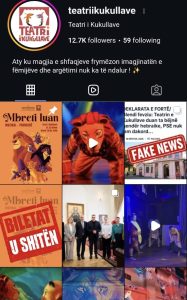
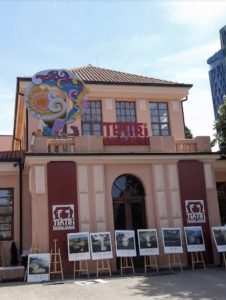
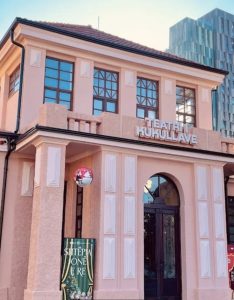
Blendi Fevziu publicly raised the possibility that the building housing the Puppet Theatre could be transformed into a Jewish cultural center. Meanwhile, Ben Blushi addressed the historical question of a proposal to establish a Jewish homeland in Albania.
These are subjects that may be discussed from historical and public perspectives. However, we must clearly distinguish between historical events, hypotheses, and present-day reality.
If a project exists to change the purpose of a public institution, the relevant documents, decisions, minutes, and administrative acts should be presented. If an agreement exists, it should be made public. If a new decision has been taken, the public has the right to know about it.
A debate of such importance cannot be built on speculation, without concrete evidence, documentation, or verifiable facts.
Responsible journalism does not rely on insinuations. It demands documents, facts, footage, recordings, and answers from the institutions concerned.
It is not right for a historic institution to become the subject of a debate that may generate fear and misunderstanding without first establishing the complete facts.
If there was a project in 2017, it must be examined within its historical and administrative context. An idea discussed in the past does not automatically mean that a current project exists to change the building’s purpose.
For this very reason, the public statement by Minister Blendi Gonxhja, who categorically rejected any change to the Puppet Theatre’s function, must be taken into consideration.
I see no reason why Albanians should fear Israel. On the contrary, Albania maintains friendly relations and a partnership with Israel, while the United States remains our strategic partner and principal ally.
We are interested in peace, development, prosperity, and international cooperation. Every nation has the right to develop its culture in its own country and preserve its national identity. Albanians have the same responsibility to protect, develop, and promote their own culture.
There is no reason to manufacture hostility. We have plenty of work to do at home.
BLENDI GONXHJA AND THE RENEWED FOCUS ON CULTURAL INSTITUTIONS
I would also like to address the work of the Minister of Culture, Blendi Gonxhja, who deserves recognition for his efforts to lead and develop Albania’s cultural institutions.
Managing a sector with so many inherited problems is no easy task. Cultural institutions require investment, historic buildings need restoration, and the artistic community needs greater financial and organizational support.
Nevertheless, the results emerging from several institutions demonstrate that Albanian culture can move forward when it receives attention, effective organization, and responsible institutional leadership.
In particular, I want to recognize the development of the Puppet Theatre. It is encouraging to see this institution regain its vitality, artistic activity, and public interest. According to figures made public by the minister, during the first seven months of 2026, the theatre staged 158 performances, attended by 16,725 spectators.
These are not merely statistical figures. Behind them are children, parents, actors, directors, playwrights, employees, and an audience that loves the theatre.
Another important achievement is the restoration and revitalization of the historic building through the EU4Culture programme, funded by the European Union and implemented by UNOPS. Returning this building to full public use represents a valuable contribution to cultural heritage and national memory.
In addition to its theatrical stage, the museum exhibitions dedicated to puppetry and the former Parliament give the institution additional historical and educational significance.
I believe Minister Blendi Gonxhja has demonstrated that cultural institutions can function effectively and deliver results when they are managed with dedication and professionalism. This work deserves recognition, support, and continuity.
Of course, appreciation does not mean abandoning criticism. On the contrary, constructive criticism is essential for further progress. However, we must also recognize positive achievements, regardless of our previous opinions or positions.
I myself have often criticized developments in Albanian culture. But when I see an institution functioning, a theatre producing performances, and a ministry paying attention to heritage and cultural development, I have no reason not to acknowledge that progress.
The Puppet Theatre must continue to develop, produce new works, and become an important center for international cooperation in children’s theatre.
THE PUPPET THEATRE: AN INSTITUTION THAT MUST CONTINUE TO DEVELOP
The Puppet Theatre is an important institution for children’s artistic education. It is not merely a building; it is part of Tirana’s and Albania’s cultural memory.
The restoration of the building and its return to public service demonstrate that cultural heritage can be preserved while also being developed.
These are achievements that deserve support and further improvement. Such an institution needs a rich repertoire, partnerships with foreign theatres, international festivals, and a dedicated programme for Albanian playwrights.
The Puppet Theatre should be a place where Albanian children discover literature, history, folklore, mythology, and human values, while also becoming familiar with contemporary artistic creations from other countries.
It should be an institution that produces art, educates future generations, and builds bridges of communication with Europe.
ALBANIAN DRAMA MUST CROSS THE BORDERS OF ALBANIA
I speak from my own experience as a playwright. I have written six puppet plays that have been translated into foreign languages and presented to audiences in different parts of Europe, particularly in Spain.
Among these works are:
– Katallani
– Katallani Finds His Sister in Catalonia
These works demonstrate the potential of Albanian dramaturgy to communicate with international audiences. Through translation, these plays can travel from one culture to another, conveying imagination, humor, tradition, and universal human messages.
But the question we must ask is this: Why does Albanian drama still lack a consistent internationalization programme?
Why are Albanian playwrights not represented more frequently at European festivals? Why are more joint programmes not being established with theatres in Spain, France, Italy, Germany, and other countries?
We have playwrights, dramatists, directors, actors, and creative professionals capable of competing on European stages. What we often lack is an organized system of promotion, funding, and international cooperation.
The Ministry of Culture and national institutions should establish a dedicated fund for translating, publishing, and staging Albanian plays abroad.
An Albanian play performed in Barcelona, Madrid, Paris, or Rome is a cultural ambassador for Albania.
ALBANIAN CINEMA IS OPENING A NEW CHAPTER
Albanian cinema also deserves special attention. During a conversation with an actress from the National Center of Cinematography, I had the opportunity to hear about the achievements and developments taking place in Albanian filmmaking.
I was impressed by the fact that Albanian cinema is increasingly seeking opportunities at international festivals and in the global film market.
One example worthy of attention is the film Lorin Terezit, which deserves consideration within the broader efforts of Albanian cinema to create works rooted in national identity while communicating universal themes.
Film should not remain a product intended solely for domestic audiences. It must reach international festivals, cinemas, streaming platforms, and foreign markets.
Albania possesses history, compelling characters, human dramas, extraordinary landscapes, and events that can become films of genuine international interest.
We need a clearer policy for international co-productions, support for screenwriters, professional development for young directors, and the promotion of Albanian films in European and American markets.
CULTURE DOES NOT DEVELOP THROUGH ISOLATION, BUT THROUGH COOPERATION
I believe the leadership of cultural institutions should be evaluated on the basis of concrete results. Minister Blendi Gonxhja deserves recognition for the work being carried out across cultural institutions, including the Puppet Theatre, sports, and tourism, while maintaining the importance of constructive criticism in every sector.
When an institution functions, when a historic building is restored, when a theatre stages productions, and when audiences return to its halls, these are achievements that deserve recognition.
Nevertheless, we should not be satisfied merely with the number of performances or spectators. We must also demand artistic quality, contemporary repertoires, original dramaturgy, and a stronger international presence.
WHAT SHOULD ALBANIA DO?
To develop Albanian culture, several concrete steps are necessary:
1. Internationalizing Albanian drama: Translating works into major European languages and presenting them in foreign theatres and festivals.
2. Supporting authors: Establishing a dedicated fund for Albanian playwrights, screenwriters, and writers.
3. Developing the Puppet Theatre: Building partnerships with European theatres, organizing children’s festivals, and expanding artistic education programmes.
4. Promoting Albanian cinema: Encouraging international co-productions, participation in festivals, and distribution in foreign markets.
5. Preserving cultural heritage: Restoring historic buildings and transforming them into active cultural spaces.
6. Cultural diplomacy: Establishing agreements with Spain, Italy, France, Germany, Israel, and other countries to promote artistic and cultural exchanges.
Culture is one of the most powerful ways to build a country’s international image. A translated book, a play performed on a foreign stage, or a film recognized at an international festival can achieve more for Albania than many political declarations.
CONCLUSION: PROTECTING OUR IDENTITY WHILE OPENING OURSELVES TO THE WORLD
Albanians have no reason to fear cultural cooperation with any nation. We must be proud of our identity while remaining open to other cultures.
The Puppet Theatre must remain a Puppet Theatre. Albanian drama must reach Europe. Albanian cinema must compete internationally. Our writers and playwrights must be translated, published, and performed in foreign languages.
It is important to recognize those who work for culture, support institutions that deliver results, and continuously demand greater professionalism and vision.
The work of Minister Blendi Gonxhja and the development of the Puppet Theatre are examples that deserve attention and recognition. This experience should serve as a starting point for even greater development of Albania’s artistic institutions.
We need more Albanian plays on European stages, more Albanian films at international festivals, more publications in foreign languages, and a cultural diplomacy that presents Albania to the world with dignity.
We do not need fabricated conflicts. We need functioning institutions, long-term cultural policies, and a national vision for the arts.
Albania should not be merely a country that imports culture. It should be a country that creates, exports, and presents its own culture to the world.
Albanian culture must move beyond its borders, not retreat behind them.
By Flamur Buçpapaj
Writer, Playwright, Journalist, and Publicist