
A Call to Albanians of the Balkans: The Restoration of the Identity of Orthodox Albanians
You saw it in Dardania – how many Albanians set out by car. Kosovo, the heart of Albania.
Editorial by Flamur Bucpapaj
There is a history that has not been written in official books, but lives in family memory, in language spoken in secrecy, and in the conscience of those who have been forced to live with two identities. It is the story of Orthodox Albanians in Greece and North Macedonia, a history built on pressure, survival, and long silence. They have not disappeared; they have become invisible.
In Greece, the modern state has been built on a strong connection between the nation and the Orthodox Church. For decades, religious affiliation has been equated with national identity. This has created a reality where every Orthodox believer is considered Greek, regardless of their ethnic origin. Orthodox Albanians in border areas and in historically Albanian regions have faced continuous pressure to declare themselves as Greeks. In many cases, this has not been a matter of conviction, but a necessity for survival: for education, for employment, for a life without administrative obstacles. Names have been changed, the language has been silenced in public and preserved at home.
In North Macedonia, the same logic has functioned under a different name. In areas such as Upper Reka and around Struga, entire Orthodox Albanian communities have been registered as Macedonian due to the lack of education in the Albanian language and institutional pressure. Children have grown up in two worlds: one within the family, where the Albanian language and traditions were preserved, and another in school and in the state, where a different identity was required.
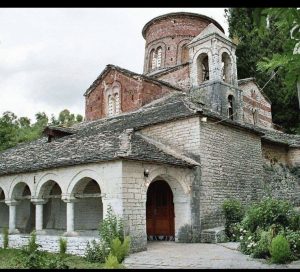
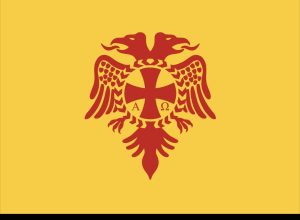
These are not isolated cases, but a phenomenon documented by researchers and reflected in distorted statistics. The number of Orthodox Albanians in official records is far lower than the historical and ethnographic reality. This discrepancy speaks of a long history of pressure and adaptation.
The consequences are visible: a divided identity, a fragmented memory, generations growing up with doubts about their origin. But this is not the end of the story. Because identity can be hidden, but it does not disappear. It awaits its moment to return.
And that moment is coming. You saw it the day before yesterday: how many Albanians from Albania set out by car toward Prishtina to unite with their Dardanian brothers. It was not just a physical movement; it was a living testimony of how we become one when the national feeling calls us. Without distinction of religion, without distinction of region, without distinction of personal history – one road, one direction, one feeling.
This is the clearest answer to anyone who still doubts. Albanians are not a community divided by religion, but a body that moves as one when its identity is touched. Therefore, anyone – whether in Serbia or elsewhere – must clearly understand this reality: Albanians cannot be measured by dividing them. They are strong precisely because they are different in religion, but united in nationhood.
The expression “the religion of Albanians is Albanianism” is today not only a historical memory; it is a visible reality. Muslim, Catholic, and Orthodox Albanians are drawing ever closer, not out of obligation, but out of awareness. And this awareness is transforming into cultural, social, and national strength.
The call to Orthodox Albanians in Greece and North Macedonia is not a call against anyone. It is a call to themselves. It is an invitation to step out of silence, to speak what has been preserved for decades in the heart and within families. Because when one part of the nation speaks, the whole nation becomes more complete.
And if anyone still does not believe this, let them wait and see. Not with fear, but with attention. Because what is forming today is not just a feeling, but a new Albanian consciousness that cannot be turned back. A consciousness that does not seek confrontation, but no longer accepts denial. A consciousness that knows identity is not negotiable.
Because in the end, a nation that awakens in all its parts becomes unstoppable.