Reconstruction of the Church of St. Mary in Vau i Dejës: A National, Cultural, and Technological Commitment to Preserving Albanian Identity
Flamur Buçpapaj
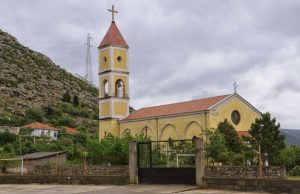
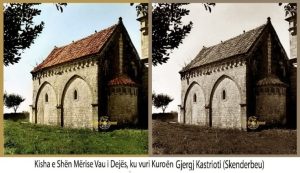
In the heart of Vau i Dejës, near Shkodër, lies a place that has preserved the spirit of Albanian history for centuries: the Church of St. Mary, where, according to tradition, Gjergj Kastrioti Skënderbeu and Donika Arianiti were married. This site has not been merely a place of worship but a center where history, faith, and the Albanian language converged, a place that preserved national identity and the spirit of a culture that has survived through the centuries. For Albanians, and especially for the Catholic community, the Church of St. Mary has been a symbol of resilience and the formation of the nation, a center where history and faith helped maintain the language and traditions that shaped the Albanian people.
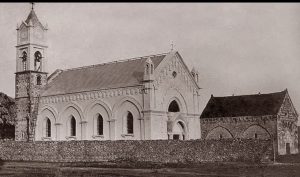
However, this church, a powerful testament to Albanian history, was destroyed in 1969 during the communist regime. This act was not just the destruction of a physical structure but an attempt to erase every trace of national identity and sever the people’s connection to their historical roots and religious heritage. The loss of the Church of St. Mary has not been solely material but a void in historical memory and national spirit, leaving younger generations without the opportunity to directly connect with Skënderbeu’s history and the symbol of national pride.
Despite this, the reconstruction of the church has not taken place for a number of complex reasons. The destruction during the communist era left behind many material losses, documents, and artworks that could have guided its restoration. After the fall of communism, lack of funding, limited political will, and competing budgetary priorities left our historical heritage neglected. The state has often failed to understand the strategic importance of these monuments as symbols of national identity and as educational tools for future generations. Moreover, foreign influences and anti-national politics have delayed initiatives, leaving a large gap in the cultural and spiritual legacy of the nation.
The failure to reconstruct the church has serious consequences for Albanian identity. Every year that passes without restoring the Church of St. Mary results in the loss of an important part of our national and cultural heritage. Younger generations will not understand the connection between history, language, and faith, nor feel the pride of preserving their identity. An opportunity is lost to strengthen national unity and reaffirm the role of the Catholic community as guardians of traditions, language, and culture.
As an Albanian and nationalist, I believe that the reconstruction of the Church of St. Mary and all historical and religious sites is an indisputable national duty. This process is not merely architectural restoration; it is a revival of the historical spirit, the Albanian language, faith, and national identity. Every stone restored and every dome reconstructed is a moral victory and a clear message that our history will not be forgotten or subjected to foreign influence.
In this effort, the use of modern technology and 3D modeling is crucial. Before physical reconstruction begins, three-dimensional models of the church will be created using historical photographs, architectural documents, and local testimonies. These 3D projects will allow for the study of every detail of the original structure, from the precise dimensions of the walls and domes to the smallest decorative elements and icons. This approach not only ensures accurate and historically authentic reconstruction but also enables the community and experts to collaborate virtually, correcting errors and preparing each step before physical construction begins.
Once the 3D model is finalized, the reconstruction will follow principles of architectural restoration, using authentic materials and traditional building techniques to preserve as much of the church’s originality as possible. Plans also include the use of modern technology to strengthen the structure without compromising historical value, such as hidden metal reinforcements in the foundations and domes or materials that replicate the texture of the original stone.
The reconstruction of the Church of St. Mary is part of a patriotic and cultural program. It aims to restore the sacred site to its original state, preserve and promote language, culture, and faith as pillars of Albanian identity, educate younger generations about the history of Skënderbeu, Catholic traditions, and the formation of the Albanian nation, and create cultural and tourist centers that serve as spaces for education and national affirmation. This project is not merely restoration; it is a patriotic and cultural manifesto, a commitment to reconnect Albanians with their historical roots.
When the deceitful and anti-national political classes are removed, reconstruction will begin with determination and passion. These churches will not be mere buildings but symbols of unity, identity, and Albanian pride, centers where history, faith, and language converge to preserve the spirit of the nation. Every stone restored and every dome rebuilt is a moral victory and a commitment to saving the nation, ensuring that the history and heritage of our ancestors are not lost under foreign influence or political indifference.
The reconstruction of the Church of St. Mary is not just a project; it is a full commitment to preserving the Albanian language, faith, culture, and identity, a clear message that Albanians never forget and will never forget their roots and heritage. This is an act of living patriotism, a step toward reconnecting generations with their origins, and a testament that national heritage is sacred and inviolable. Every step in this direction signals the strength and resilience of the Albanian people and is a permanent reminder that our identity and culture are untouchable.
We nationalists pledge that we will restore Albania to its true identity, not only culturally but also as a strong, sovereign state, permanently allied with the United States.